
The short answer is to buy the right access, not the nearest address
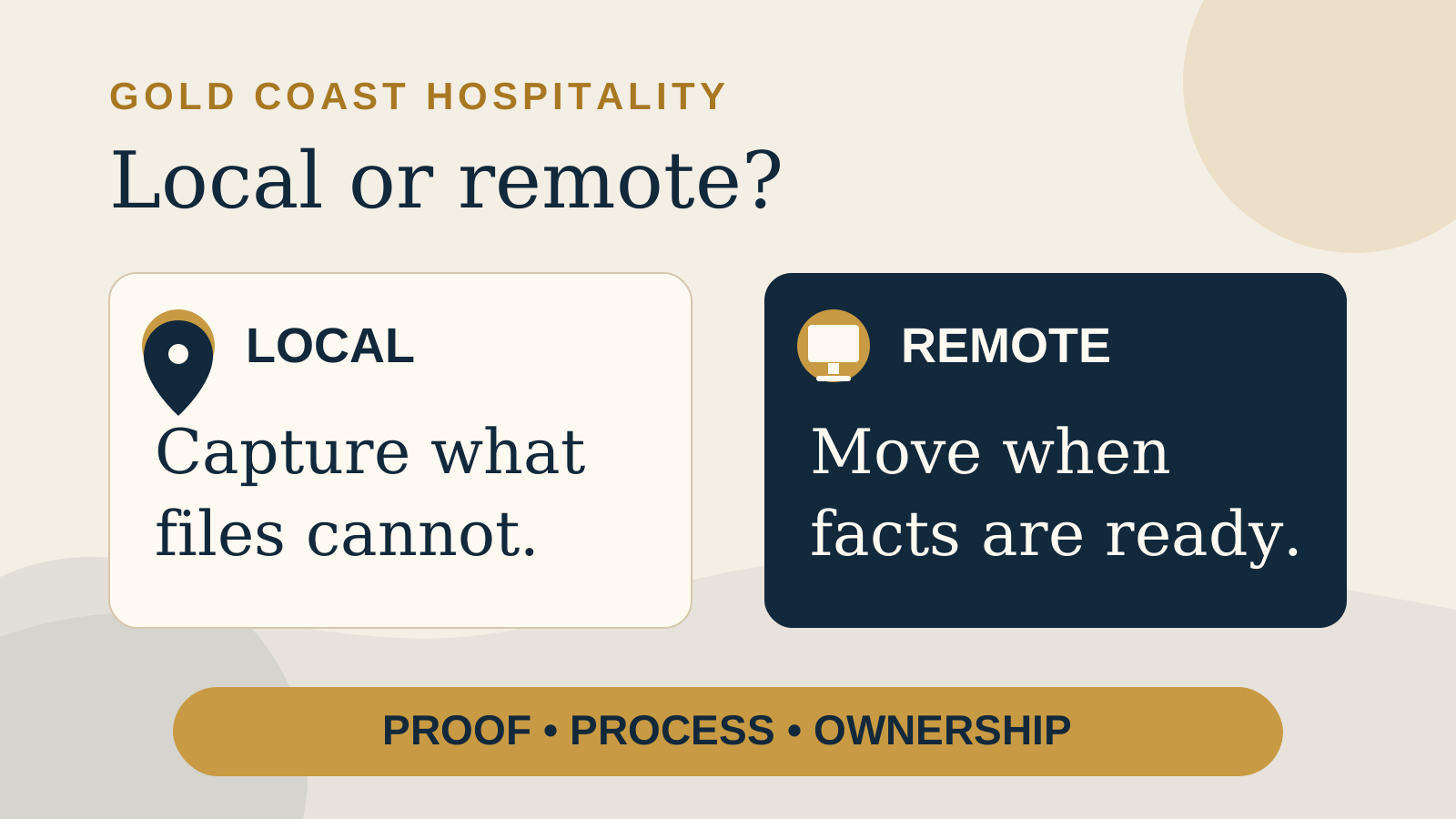
A Gold Coast restaurant, cafe, or boutique stay may benefit from a designer who can walk through the venue. It may also receive an excellent website from a specialist who works remotely. Distance is only useful when it changes the quality of the input, the speed of a decision, or the way the finished site is maintained.
Start by listing the moments that genuinely need access. Does someone need to photograph breakfast service, understand a difficult entrance, compare two dining areas, or meet several decision makers at once? If the answer is no, paying for proximity without a clear job can add little. If the answer is yes, include those moments in the scope instead of assuming every meeting must happen in person.
The useful hiring question is therefore not “Who is closest?” It is “Who can understand our venue, make the mobile guest path clear, finish the work reliably, and leave us in control?”
Local presence helps when the venue itself contains missing information
Some website problems are difficult to solve from a folder of old images and a phone call. A local visit can be valuable when the person creating the site needs to observe something that guests will need to understand.
- Fresh photography is part of the project. A cafe in Palm Beach may need morning light, cabinet food, outdoor seating, and the walk from the street captured in one planned session.
- The arrival needs explanation. A restaurant inside a hotel, laneway, club, or mixed use building may need precise directions and visual cues that are easiest to document on site.
- Several experiences share one venue. A bar, dining room, private space, and event area can look similar in a file library but need different pages and calls to action.
- Decisions stall online. A short workshop with the owner, venue manager, and marketing person may resolve the primary audience, booking path, and content ownership faster than a long message thread.
- The existing content is unreliable. A venue walkthrough can identify outdated menus, signs, accessibility details, and contact information before those mistakes reach the new site.
Local should describe a useful project activity, not a vague promise. Ask what will happen at the venue, who will attend, what will be captured, and what the visit will produce. “Site visit and photography plan” is meaningful. “We are based nearby” is not a deliverable.
Remote delivery works well when the facts, assets, and decisions can travel
Many hospitality website projects do not require constant physical access. If the venue already has current professional photographs, a clear brand, accurate menus, and one person who can approve decisions, remote delivery can be focused and efficient.
A remote designer should still understand how hospitality guests behave. They need to ask about the difference between booking and joining a waitlist, whether menus change by service, which location a phone number reaches, how private dining enquiries are handled, and what a guest needs when checking the site outside the venue.
Remote work is a good fit when:
- The owner can provide a current menu, hours, location details, policies, booking link, and image library.
- One named person can collect internal feedback and approve each stage.
- The designer shows work in a browser and tests the real mobile paths, rather than reviewing only static pictures.
- The project has clear review dates, response expectations, and a record of approved decisions.
- Photography, copy, integrations, and launch support are either included or clearly assigned to someone else.
Do not confuse remote with unavailable. A useful remote process still tells you when meetings happen, where feedback goes, who answers questions, and what happens if a booking link or menu fails during testing.
Judge hospitality evidence before postcode
A polished portfolio is a starting point. Look past the first screen and test whether the work helps a real guest make a decision. Open the examples on your phone. Try to find the menu, understand the location, check the service, and reach the booking or enquiry step. Look for evidence that the designer can organise practical information without flattening the venue's character.
Ask the designer to explain one relevant project in plain language. What was unclear before? What did they change? How did they choose the primary action? What did the owner need to maintain after launch? A thoughtful answer is more useful than a list of industries or software names.
For a Gold Coast venue, relevant judgment could include making different services easy to distinguish, helping visitors understand where to arrive, keeping outdoor and weather dependent details current, or showing both atmosphere and essential facts on a small screen. The designer does not need to claim universal local expertise. They need to show how they will learn what is specific to your operation.
Compare the process, not just the first quote
Two proposals can use the same phrase, “restaurant website,” while covering very different work. Compare what each person will actually deliver and what your team must supply.
- Discovery: who identifies the primary guest, main action, services, content gaps, and success criteria?
- Content: who writes, edits, photographs, crops, and approves the menu, venue story, practical details, and policies?
- Guest paths: who connects bookings, orders, gift cards, calls, maps, or enquiries, and who tests each handoff?
- Mobile review: will you inspect a working site on real phone widths before launch?
- Search foundations: are page titles, descriptions, headings, indexable content, redirects, and location details included?
- Launch: who controls the domain, publishes the site, checks forms and links, and watches for problems after the switch?
- Aftercare: what can staff update, what support is included, and what creates a new charge?
Travel, photography, copy, platform subscriptions, booking tools, and ongoing care should be visible rather than implied. A lower build figure can become the less useful choice if essential work is excluded or nobody is responsible for the final guest path.
Protect ownership before design begins
Local and remote projects need the same ownership conversation. The agreement should say who owns the final written content, images, design work, and any custom code, what third party licences still apply, and what the venue receives at handover. The Australian Government's Guide to starting a business says a contractor agreement should include who owns the rights to intellectual property.
Keep the domain and essential business accounts under the venue's control, with appropriate access for the designer. This matters well beyond launch. Business.gov.au lists domain names and web registrations among the marketing assets that should be transferred when business ownership changes.
- The venue knows which account holds the domain and how renewal is paid.
- The proposal identifies hosting, website platform, booking tools, forms, analytics, and any ongoing subscriptions.
- The agreement explains what can be moved, exported, or handed to another provider.
- The venue receives the agreed credentials, files, licences, instructions, and account roles at handover.
- Any ongoing support has a clear scope, response path, and price before the project begins.
Ownership does not mean the owner must manage every technical detail. It means the business can recover access, understand its commitments, and change partners without losing its public identity.
Use this local or remote decision table
| Project condition | Likely fit | What to confirm |
|---|---|---|
| New photography and a complex venue story | Local or hybrid may help. | Who plans the shot list, attends, shoots, selects, and licences the images? |
| Current assets, clear offer, one decision maker | Remote can work very well. | How are working pages reviewed and mobile paths tested? |
| Several spaces, services, or locations are easy to confuse | Choose the person with the clearest discovery plan. | Will they visit, run a structured remote workshop, or use both? |
| The owner is busy and feedback comes from many staff | Either can work with one approval lead. | Who consolidates feedback and what happens when decisions are late? |
| Ongoing menu and detail changes matter most | Choose around support and safe updates. | What can staff change, who handles urgent fixes, and what is charged? |
The table is not a scorecard. A local designer can run a poor process, and a remote designer can misunderstand the venue. Use it to expose what the project needs, then ask each candidate how they will cover that work.
Ask these questions before hiring
- Which parts of this project genuinely need you at the venue? Ask for the output from each visit.
- How will you learn the service if you work remotely? Look for a specific discovery and content process.
- Can you show a hospitality site working on a phone? Test the menu, location, and main action yourself.
- Who is responsible for photography and copy? Do not assume either is included.
- How will bookings, orders, calls, maps, and forms be tested? A link existing is not the same as the full path working.
- What is excluded from the quote? Ask about travel, subscriptions, integrations, revisions, content entry, launch, and support.
- What will our venue own and receive? Confirm the domain, accounts, licences, content, files, access, and handover.
- How do reviews and approvals work? Name one venue decision maker and one place for consolidated feedback.
- What happens after launch? Clarify the included support period and the path for urgent changes.
- What would you advise us not to build? A useful partner should be able to reduce unnecessary scope.
If the answers are vague before the deposit, location will not rescue the project. If the answers are clear, you can compare candidates on the work that matters rather than a broad promise of being local or flexible.
Write a one page brief before you compare candidates
Give each candidate the same short brief. Include the venue type and location, the primary guest action, current website problems, required pages, booking or ordering systems, available photography, who approves decisions, ideal launch window, and the access that may be needed on site.
Add three direct constraints. State what must remain working during launch, what your staff must be able to update, and which accounts the venue will own. This makes proposals easier to compare and reduces the chance that one quote includes content and migration while another covers only design and setup.
If you need a structure, use the restaurant website brief guide. For the local guest experience and search basics, the Gold Coast restaurant web design guide shows the practical information a venue site should make easy to find.
For a free first pass, use the Restaurant Website Quick Score. It checks nine guest essentials and returns three priority issues you can add to the brief, then use to compare how each candidate would respond.
Check the current site before you commission the next one
If you already have a website, the US$35 Website Check can help separate visible guest friction from a larger build decision. It reviews mobile experience, menu access, booking paths, and search essentials, then gives you five priority fixes with clear screenshots or notes and a short consultation. Use the findings as evidence in your brief, whether you choose a local or remote designer.
Get the US$35 Website CheckSources
Official guidance checked October 15, 2026. The local or remote decision framework is Nagi Creative's practical guidance, not legal advice. Review the project agreement with an appropriate professional if ownership terms are unclear.