
The short answer
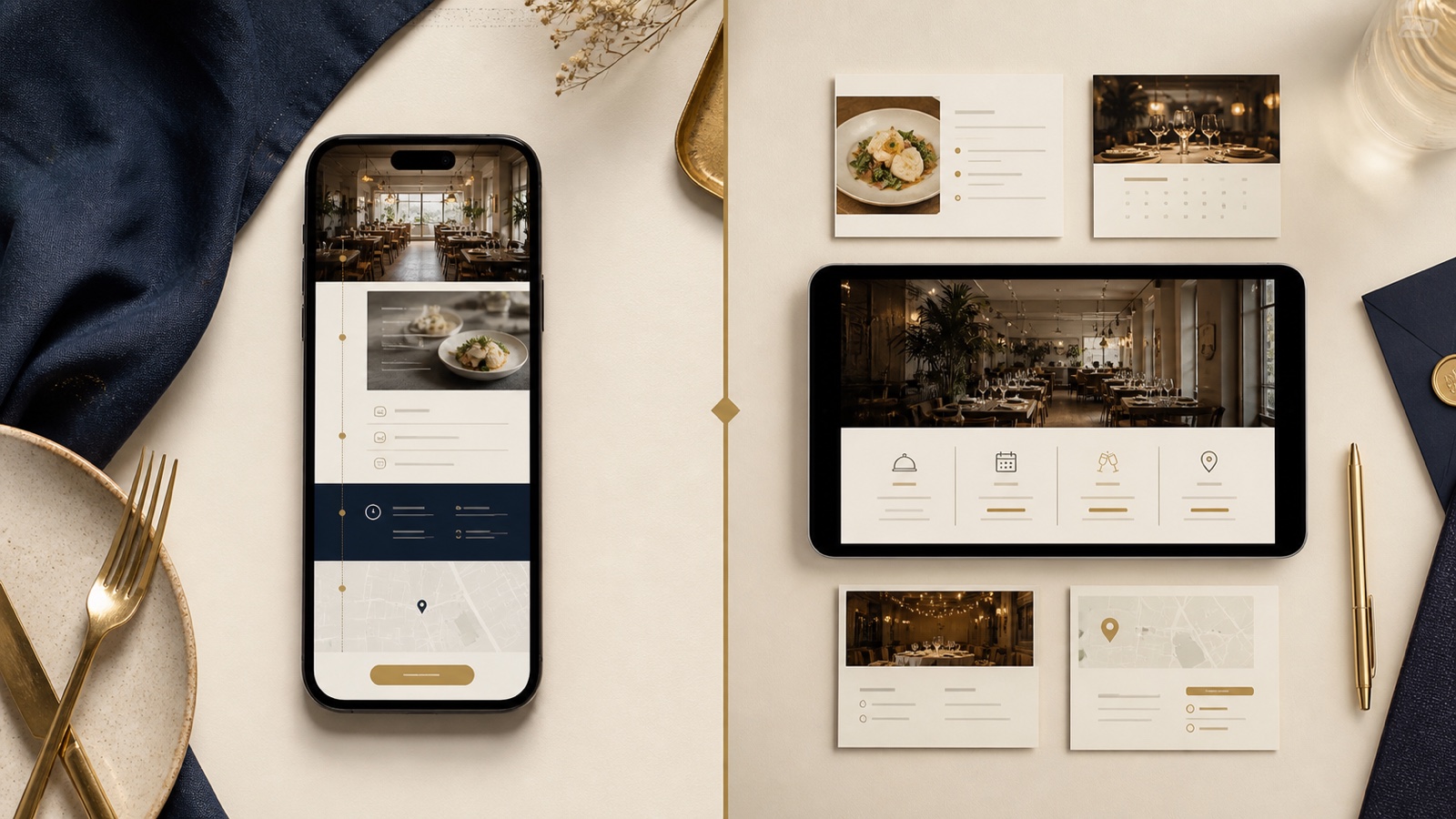
Choose a one page website when the venue is genuinely simple and the main guest tasks fit cleanly together. A small cafe with one location, one current menu, straightforward hours, a map, and a single call or booking action may not need separate pages.
Choose multiple pages when guests need focused information for different decisions. A full menu, reservations, private dining, events, more than one location, accommodation, or separate lunch and dinner offers can each deserve a stable page of its own.
Do not add pages just because someone says more pages are better for SEO. Google's published guidance does not prescribe an ideal page count. It focuses on useful, well organised content and crawlable links. The goal is not the fewest pages or the most pages. It is a structure that helps a guest reach the right answer without hunting.
Start with guest tasks, not a page target
Before choosing a format, list what a new guest may arrive to do. For a restaurant or cafe, that could be checking the menu, understanding dietary options, booking a table, ordering takeaway, finding the address, or confirming opening hours. For a boutique stay, the list may also include comparing rooms, checking availability, understanding facilities, and planning the journey.
Now separate the tasks that need their own context from the details that can sit together. An address, phone number, and weekly hours naturally belong in one compact contact section. A private dining offer may need capacity details, sample menus, photographs, enquiry information, and a link a guest can send to an event organiser. That is a different content job.
This exercise also makes website quotes easier to compare. “Five pages” says very little by itself. “A menu page that the team can update, a private dining page with an enquiry path, and a location page for each venue” describes useful scope. Our guide to what a restaurant website quote should include explains the other details worth naming before a project starts.
When a one page website is enough
A one page site can be a calm, economical choice when all essential information forms one short story. It works best when the venue has one location, one main offer, a limited amount of current content, and one obvious next action.
A useful one page restaurant or cafe site might move through these sections:
- What the venue is: one clear introduction and a small set of photographs that show the atmosphere.
- What guests can eat or drink: a readable menu or concise menu preview, with dietary information where it is useful.
- What to do next: one primary booking, call, or ordering action.
- How to visit: current hours, address, map link, phone number, and practical arrival details.
The navigation should jump to those sections with ordinary links, and the most important actions should still be obvious on a phone. The page is only simple if it feels simple to the guest. A very long page with several menus, multiple booking widgets, an event calendar, room details, and three contact forms is a multi page website squeezed into one URL.
One page also means less room for repetition and fewer places for hours or phone numbers to drift out of sync. But it creates one shared update surface, so the team still needs a clear owner for the menu, booking link, closures, and other changing details.
When multiple pages are the clearer choice
Use separate pages when a guest task needs enough detail, a distinct action, or a durable link of its own. “Durable” simply means the URL remains useful when it is saved, sent in a message, linked from an email, or opened from a business profile.
Common reasons to use multiple pages include:
- A substantial menu: Guests need to scan sections, prices, dietary information, or different service periods without working through the entire homepage. See the practical choice between a restaurant menu PDF and a web page.
- Bookings with important context: Deposits, seating choices, cancellation terms, group sizes, or more than one reservation path need room around the booking action.
- Events and private dining: Capacity, packages, sample menus, photographs, availability, and an enquiry form serve a different decision from an everyday table booking.
- Several locations: Each location may need its own address, hours, menu, phone number, booking link, and local arrival details.
- Rooms or stay packages: Guests need to compare room types, inclusions, policies, availability, and the next step without losing the wider story of the property.
- Distinct offers: A restaurant with a dining room, rooftop, takeaway menu, and catering service may be clearer when each offer has focused information and an appropriate action.
A multi page site does not have to become large. A homepage plus menu, booking, private dining, and visit pages may be enough. Add a page because it has a clear job, not because it fills a navigation bar.
What page count means for Google Search
Page count alone does not improve rankings. A thin page created only to make the site larger is not automatically useful to a guest or easier for a search engine to understand. A strong one page site can be the right answer for a simple venue, while focused pages can make sense when there are genuinely separate topics and actions.
Google explains that it uses links to discover pages and as one signal for understanding relevance. It recommends standard HTML links with an href and descriptive anchor text. In practical terms, every important page should be reachable through clear navigation or a relevant link from another page. A menu link should say “Menu” or describe the menu, not hide behind an unexplained icon. A private dining page should be linked from the place where a group organiser would naturally look for it.
For local business information, Google's structured data documentation shows properties for details including name, address, phone number, hours, and menu URL. That markup can describe the business information already present on the site. It does not decide whether the site should have one page or several, and adding it is not a substitute for accurate visible content.
A sitemap can help search engines understand which URLs you care about, but it also does not turn unnecessary pages into valuable ones. If search visibility is part of the project, start with the venue, location, offer, and guest need. The wider priorities are covered in our practical restaurant SEO guide.
Map the right scope before you request a build
Write each guest task on a separate line. Beside it, note the information required, the action a guest should take, how often the content changes, and who will maintain it. Then group the tasks that share the same context.
For example, hours, address, parking, and a map link can form one Visit page or one homepage section. A private dining enquiry needs different proof and a different form from a normal reservation, so it is a good candidate for a focused page. Two locations with different hours and menus should not be presented as if they are interchangeable.
Next, test the planned structure on a phone. Can a first time guest reach the menu, booking action, and directions from the top level? Can someone share the exact information they are discussing? Can your team update a menu or event without accidentally changing an unrelated part of the site?
Check the guest journey before changing the structure
The free Restaurant Website Quick Score checks nine essentials on your current site, including mobile clarity, menu access, booking, and contact details. Use the result to see whether the problem is page structure or a smaller clarity issue.
Try the free Restaurant Website Quick ScoreA compact decision checklist
- Does the venue have one location, one main offer, and one obvious guest action?
- Can the menu, hours, location, and action fit on one page without becoming a long stack of competing sections?
- Do menu, bookings, events, private dining, locations, or rooms need substantial information of their own?
- Would a guest reasonably save or share a direct link to one of those topics?
- Does each proposed page have a clear purpose and enough useful content?
- Can every important page be reached through a clear, crawlable link?
- Can the team keep the chosen structure accurate after launch?
If the first two answers are yes and the rest are no, one page may be plenty. If several guest tasks need distinct information, actions, or shareable links, a small multi page site is usually the clearer scope.
Want a second opinion on the structure?
The US$35 Website Check reviews your live site and gives you a short priority list across mobile clarity, menu or stay information, booking, and search visibility. It can help you see whether you need a new structure or a more focused fix.
Get the US$35 Website CheckSources
- Google Search Central, link best practices
- Google Search Central, LocalBusiness structured data
- Google Search Central, sitemaps overview
- Google Search Central, SEO Starter Guide