
The short answer is to keep what works and replace what keeps blocking progress
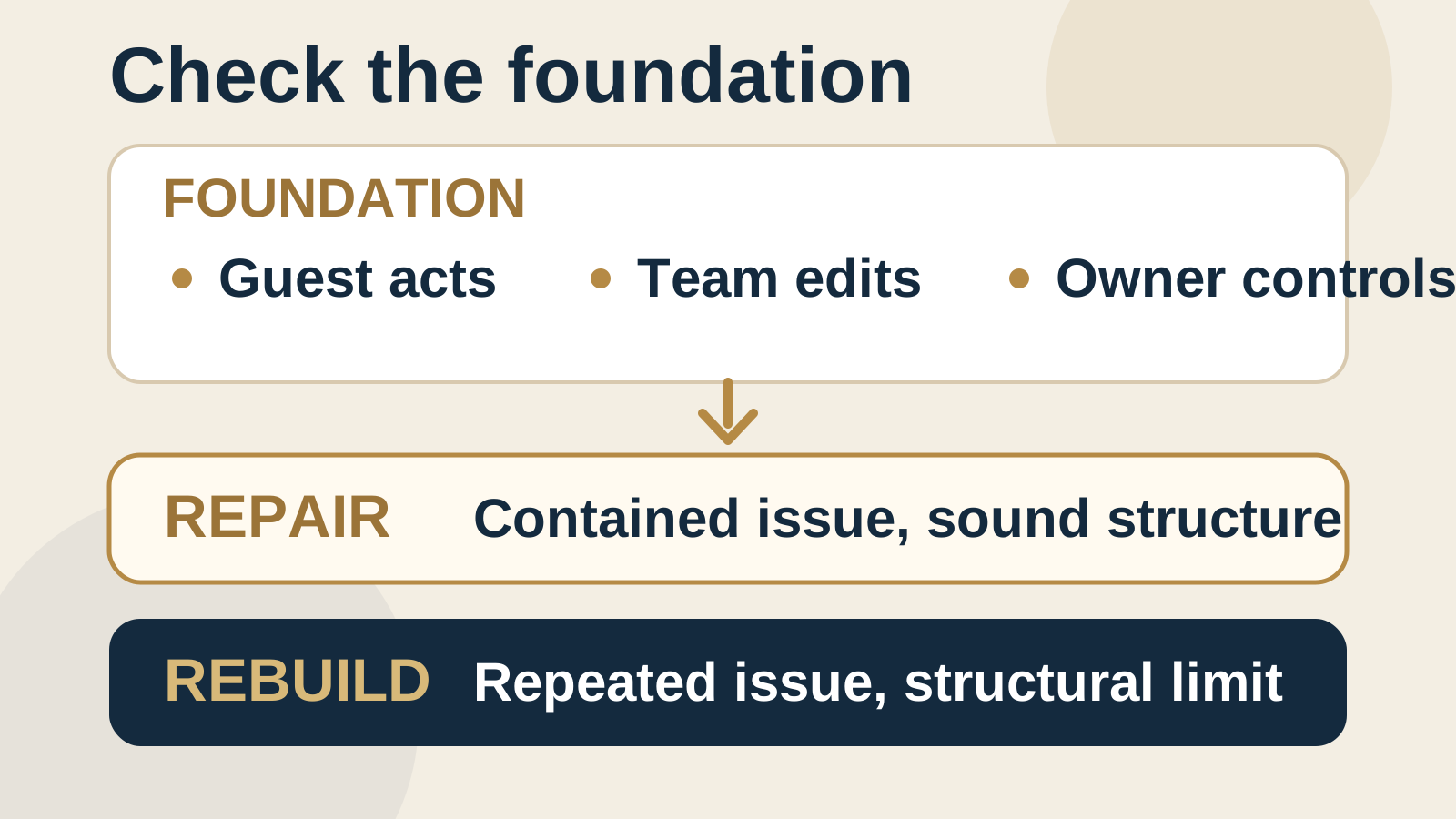
Repair the current website when its basic structure is sound, the important guest paths work, the venue controls the essential accounts, and the problems are limited enough to describe page by page. A clearer homepage, a readable menu, better photographs, a simpler booking button, or improved phone layouts can be meaningful work without becoming a complete rebuild.
Rebuild when the same limitation appears across the whole site. That may mean the structure cannot separate menus, locations, private dining, and bookings clearly. It may mean routine updates are unsafe, mobile layouts break across several pages, or every small change creates another workaround. In that situation, repeated repairs can preserve the source of the problem.
The key question is not whether the site looks old. Ask whether the current system can support three things: a guest making a confident decision, the team keeping essential facts current, and the owner retaining control of the website. The answer gives you a stronger brief than a general request to modernise the design.
Check the foundation before discussing colours or style
A website can look tired and still have a useful foundation. It can also look polished while hiding a fragile menu, confusing location path, or booking handoff. Begin with the parts that determine whether a repair can last.
- Guest structure: Can a new visitor find the current menu, hours, location, booking or ordering action, and contact details without guessing?
- Mobile use: Can someone read the important information and complete the main action on a phone without zooming, hunting, or closing an obstruction?
- Routine updates: Can the right person change hours, menus, photographs, and links without risking unrelated parts of the site?
- Connected systems: Do reservation, ordering, enquiry, map, and email paths reach the correct venue and give the guest a clear next step?
- Ownership: Does the business control the domain and know who holds the website, hosting, analytics, and connected service accounts?
- Useful history: Are there existing pages, links, or search entry points that should remain available through any change?
Write the answer to each question with evidence from the live site. Name the exact page, action, and device. “The dinner menu is unreadable on a phone” is a problem that can be scoped. “The website feels bad” is only the beginning of a conversation.
Choose a focused repair when the problem has a clear boundary
A repair is usually the stronger choice when the current website can carry the next version without fighting it. The work still needs a defined outcome, but it does not need to disturb every page or system.
- The navigation and page structure already match the main guest decisions.
- The menu, hours, location, and primary action are current or can be corrected in known places.
- The booking, ordering, or enquiry provider works, but the path into it needs clearer labels or placement.
- The mobile issues affect a small set of templates or components rather than the whole site.
- The visual identity needs better type, spacing, photography, or hierarchy, while the content structure can remain.
- The team can maintain the result once the repair is complete.
Give the repair a boundary. Name the pages included, the guest actions being improved, the content the venue must provide, the checks required before release, and what is explicitly outside the work. A small project becomes expensive when it quietly turns into a rebuild through a series of unrecorded additions.
Also decide what success looks like before the visual work begins. Success might mean a guest can reach the correct dinner menu from the first screen, choose the right location, or complete a private dining enquiry with the information the team needs. Those outcomes make the final review more useful than a debate about whether the site feels newer.
Choose a rebuild when the foundation keeps recreating the problem
A rebuild is justified when improvements cannot be made safely or coherently inside the current structure. The reason should be visible in the work, not hidden behind a preference for a new platform or a larger project.
- Structure failure: Different guest needs have been compressed into pages that cannot explain them clearly.
- Repeated mobile failure: Navigation, menus, forms, and actions break across several templates, so isolated fixes leave the experience inconsistent.
- Unsafe upkeep: Routine changes require technical intervention, shared credentials, duplicated content, or workarounds the venue cannot sustain.
- Brittle connections: Important booking, order, gift card, map, or enquiry paths depend on outdated or poorly understood connections.
- No coherent design system: Basic elements behave differently from page to page, making every repair slower and less reliable.
- The venue has changed: New locations, services, dayparts, events, or a new brand direction require a structure the current site was never built to support.
A rebuild should remove recurring friction, not merely replace one set of pages with a prettier copy. Keep the useful facts, photographs, URLs, guest paths, and operational knowledge that still serve the venue. Replace the system around them where it limits clarity or upkeep.
If the decision is already a rebuild, use the restaurant website redesign checklist to protect menus, bookings, useful pages, and ownership through the change. That is a separate job from deciding whether the rebuild is necessary.
Separate a content problem from a system problem
Many websites are blamed for information nobody has prepared. A new build cannot create a current menu, accurate hours, useful room descriptions, approved photographs, or a clear booking policy by itself. If the missing ingredient is content, changing the platform may move the blank space without solving it.
Test the distinction with one important page. Draft the current content first. Gather the best available photographs. Confirm the action and destination. Then ask whether the existing website can publish that page clearly on a phone and let the team maintain it.
- If the answer is yes, the immediate problem is likely content, presentation, or a contained repair.
- If the answer is no because the system cannot create the needed structure or interaction safely, the case for a rebuild becomes specific.
- If nobody owns the facts after launch, both options will drift. Assign the update responsibility before choosing either scope.
This simple test prevents a common mismatch: buying a complete new site when the venue first needs decisions, words, photographs, and ownership. It also prevents endless copy edits when the existing system genuinely cannot present those materials well.
Compare repair and rebuild proposals against the same outcome
Do not compare a narrow repair quote with a broad rebuild quote as if the lower total answers the decision. Ask both options to address the same guest and operational outcomes. The scope can differ, but the destination should be comparable.
- Pages and actions: Which exact guest journeys will work better when the project is complete?
- Content responsibility: Who writes, supplies, checks, and approves menus, photographs, policies, and venue facts?
- Connections: Which booking, ordering, payment, map, email, or enquiry services are included?
- Mobile acceptance: Which real tasks will be tested on a phone before approval?
- Ownership and handover: Which accounts, files, instructions, and access stay with the business?
- Future updates: Who can change routine information, and what happens when the venue adds a new service or location?
- Launch responsibility: Who checks the live result, old links, forms, analytics, and connected actions?
A useful proposal should make exclusions visible too. If menu entry, copy, photography, booking setup, or ongoing updates are separate, the owner needs to see that before comparing totals. The article on what a restaurant website quote should include gives a fuller framework for reviewing that scope.
Run one contained repair test when the answer is still unclear
When the foundation is uncertain, choose one high value guest path and test whether the current site can support a proper improvement. Good candidates include the homepage to menu path, the location choice to booking path, or the private dining page to enquiry confirmation.
Define the test before work begins:
- One path has a clear starting page and final action.
- The required copy, images, links, and venue decisions are ready.
- The phone layout and the connected service will be checked from the public side.
- The person responsible for future updates can repeat a routine change.
- The test has a stop point. It will not expand into an unplanned site wide project.
If the improvement can be completed cleanly and the team can maintain it, expand the repair only where the same pattern applies. If the test exposes structural limits across templates, permissions, or connections, that evidence can shape a rebuild brief. Either result is useful because the decision now rests on the real website rather than an assumption.
Write a one page decision brief before requesting the final quote
Summarise the decision in plain language. Record the primary guest action, the three most important problems, the parts of the current site worth keeping, the evidence that points to repair or rebuild, the content already available, and the person who will maintain the result.
End with one sentence:
We are choosing a repair because the foundation works and the problems are contained.
Or:
We are choosing a rebuild because the current foundation prevents clear guest paths and dependable updates across the site.
If neither sentence is supported yet, do not force the decision. Inspect the live path, prepare the missing content, or run the contained test first. A short evidence phase is cheaper than paying for the wrong scope.
Start with the free Restaurant Website Quick Score
The free Restaurant Website Quick Score checks nine guest essentials and returns three practical priorities. Use it on the current site before asking for quotes. The result can help you see whether the main problems are contained, or whether the same friction appears across the full guest journey.
Want a focused second opinion before you choose?
The US$35 Website Check is for independent restaurant and cafe websites. It reviews the live mobile journey, menu, booking or ordering path, essential venue details, visual clarity, and search basics. You receive an ordered set of priorities that can help you decide whether to repair the current site or prepare a larger rebuild brief.
Get the US$35 Restaurant Website Check