
The short answer is often Instagram plus a small website
If Instagram already brings in guests, keep using it. A lively account can show food, rooms, people, atmosphere, seasonal changes, and the everyday proof that a hospitality business is active. The question is not whether Instagram has value. It is whether it can answer every important guest question reliably when someone is ready to visit, book, order, or enquire.
For many independent restaurants, cafes, and boutique stays, the practical middle ground is a focused one page website alongside Instagram. The social account continues to do what it does well. The website holds the current menu or room information, hours, location, primary action, and contact details in a predictable structure.
A fuller website earns its upkeep when different visitors need genuinely different paths, such as dining, private events, multiple menus, rooms, experiences, or detailed policies. It is not automatically better because it is larger. The useful choice is the smallest structure that answers real questions and that the team can keep current.
Give Instagram and the website different jobs
Instagram is well suited to fresh visual proof. A prospective guest can see this week's dishes, a busy terrace, a new room detail, staff personality, or a short event announcement. Comments, tags, and shared posts can also help people encounter a venue through other people.
A website is better suited to information that should remain easy to find in the same place. That includes the current menu, normal hours, address, map context, booking or enquiry route, accessibility notes, room details, event information, and the venue's own explanation of what it offers. A guest does not need to search captions or highlights to find the answer.
The website also gives each important topic a direct link. You can send someone straight to the menu, rooms, private dining, or booking path instead of asking them to browse a profile. Google explains that useful, well organised website content can help search engines understand pages and help people decide whether to visit from search results. That does not guarantee indexing or ranking.
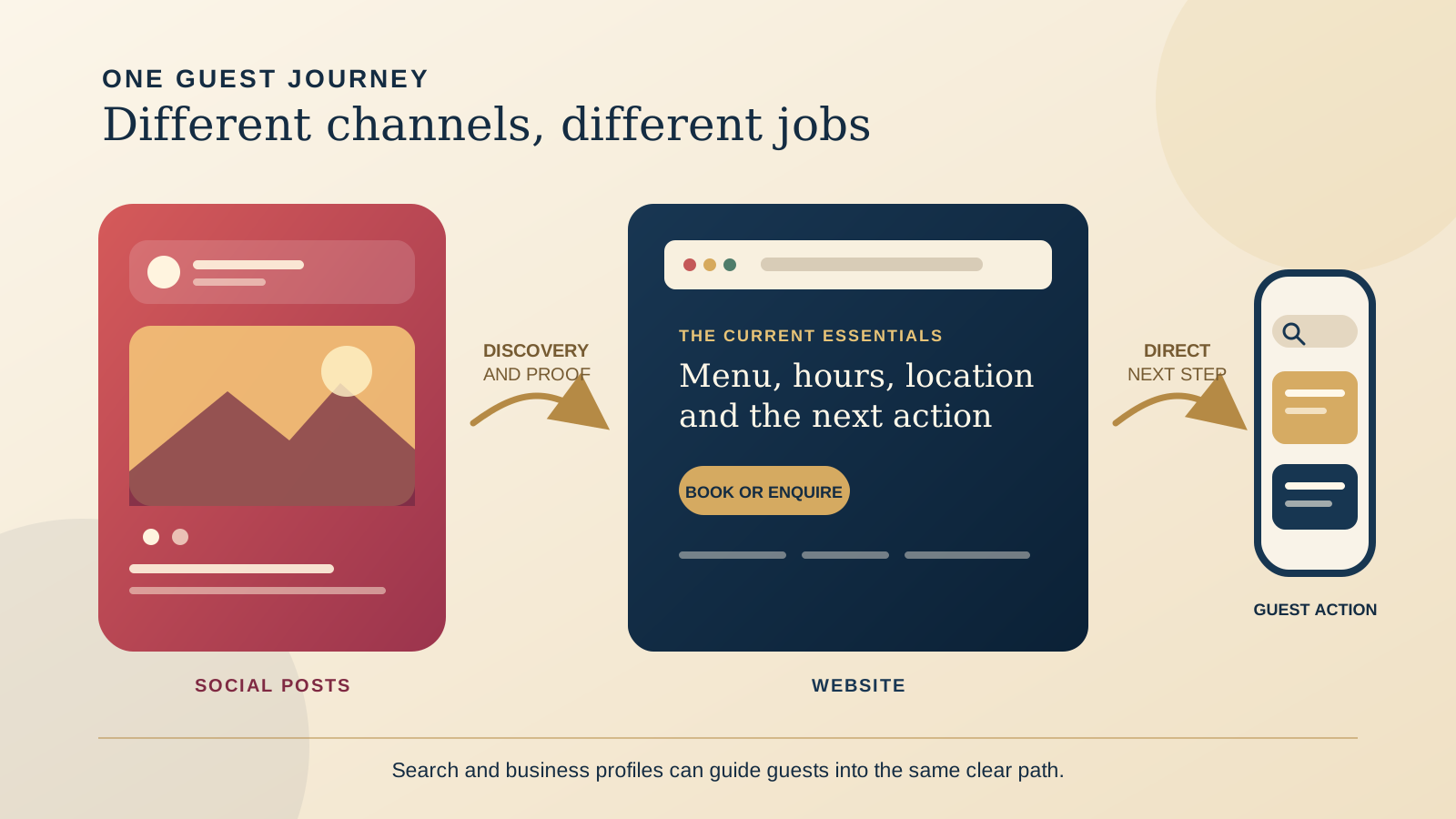
Think of the two channels as a handoff. A post creates curiosity. The profile link, Google profile, or search result leads to a stable page. The page confirms the details and presents the next action. Either channel can start the journey, but the guest should not encounter conflicting hours, menus, addresses, or booking links.
Instagram only can be reasonable when the guest journey is truly simple
Staying with Instagram only may be a workable short term choice when the venue is new, the offer is very simple, the team is still validating demand, and most guests already know what to do next. A market stall, short pop up, or appointment based tasting with limited dates may not need a permanent multi page site immediately.
Before choosing this route, check whether all of these statements are true:
- The account is public, current, and actively maintained.
- The bio clearly states what the business is and where it operates.
- Normal hours, address, contact details, and the primary action are easy to reach without reading recent posts.
- The menu, booking, ordering, or enquiry destination works well on a phone.
- Someone checks direct messages and knows how quickly to respond.
- Google Business Profile and any other live listings show the same current essentials.
- The business accepts that guests who do not use Instagram may have a less direct path.
Instagram says eligible photos and videos from public professional accounts may appear in search engine results. That can add discovery beyond the app, but it does not turn a profile into a structured venue website or guarantee that a particular post will appear for a useful search.
Set a review date rather than treating Instagram only as a permanent default. If the team repeatedly answers the same questions in messages, guests miss changes buried in posts, or important offers need separate explanations, the channel is showing you what the first website should contain.
A one page website is enough when the essentials fit one clear journey
A one page site is often the useful next step for an independent cafe, neighbourhood restaurant, bar, or small stay. It can preserve the warmth and immediacy of Instagram while giving ready guests a clean route through the core information.
Choose this option when one location and one main offer account for most visits. The page can introduce the place, show selected photographs, explain the offer, provide current practical details, and end in the relevant action. Sections can have direct anchor links, so a profile or Google listing can send someone close to the information they need.
Keep it focused. A one page site should not become a long archive of every announcement and dish. Instagram can hold the ongoing rhythm. The site should present a small, edited version of the brand and the details that should still make sense next week.
A one page site also needs an owner. Decide who changes hours, menu links, booking destinations, pricing notes, and seasonal closures. A small inaccurate website is less useful than a current social profile. If you are comparing structures, read One Page or Multiple Pages for a Restaurant Website?.
A fuller website helps when guests need distinct paths
Add pages when the content has a different audience, purpose, or next action. A restaurant may need separate paths for dining, private events, catering, gift cards, or multiple locations. A boutique stay may need room types, facilities, location guidance, policies, and a clear handoff to live availability.
Separate pages can make each decision easier to explain and easier to share. Someone planning a private dinner can receive the private dining page. A traveller can compare room types without moving through restaurant content. A guest searching for a specific service may reach the page that answers that need directly.
Use a fuller site when the team has enough accurate material to maintain it. More pages create more places where old hours, menus, photographs, policies, and links can linger. Before expanding, name the person responsible for updates and set a simple review rhythm.
Do not add pages only to target more search phrases. Google recommends content made for people that is useful, reliable, easy to read, and well organised. A clear page about a real service can support guests and search understanding. Thin pages written only to chase visibility are not a sound reason to grow the site.
Build this minimum useful one page website
If Instagram is already working, the first site does not need to replace it. It needs to remove uncertainty for a ready guest. Start with this checklist:
- Clear identity: State the venue type, defining offer, and location in language a first time guest understands.
- Current visual proof: Select a small set of strong photographs that show the food, room, space, or experience accurately.
- Primary action: Make booking, ordering, directions, checking availability, calling, or enquiring obvious. The label should match the destination.
- Menu or offer: Link to a current, readable menu, room summary, service list, or offer. Avoid making an Instagram highlight the only complete explanation.
- Hours and availability context: Show normal hours or service times, plus a clear route to live availability where relevant.
- Location: Include the full address, useful arrival context, and a directions link. Add parking or access notes when they affect the visit.
- Contact: Provide the contact method the team actually monitors, with realistic response expectations for enquiries.
- Essential policies: Surface the details that change a decision, such as booking terms, accessibility, children, pets, dietary enquiries, or check in information.
- Social link: Keep Instagram easy to reach for fresh proof and daily updates.
- Search basics: Use a clear page title, useful headings, descriptive text, a canonical URL, and accurate business details.
- Mobile check: Test every link, menu, form, and action on a real phone before launch.
- Update owner: Assign one person to review hours, links, menu references, and other changing facts.
Build the page around the guest's order of questions, not the order in which the business supplied the content. Usually that means: what is this place, is it relevant to me, where and when can I visit, what does it offer, and what should I do next?
Connect the channels instead of copying one into the other
Place the website link in the Instagram bio, then choose the most useful landing destination. If the primary goal is table reservations, send guests to a page where the venue and booking action remain clear. If the venue changes its offer often, the home page may be the safer starting point.
Use posts and stories to point to stable website information when detail matters. An event announcement can lead to an event or enquiry section. A seasonal menu post can lead to the current menu. A room feature can lead to room details and then live availability.
Do not automatically embed the full Instagram feed just to make the site feel current. An embed can add loading work and place changing third party content inside the main page. A selected gallery, clear Instagram link, or a few intentional embeds may serve the guest better. The guide to using an Instagram feed on a restaurant website explains the tradeoffs.
Give every change one source of truth. If hours change, update the website, Google Business Profile, booking or ordering platform, and Instagram notice as appropriate. A social post can announce the change, but it should not be the only place a guest can confirm it later.
Plan for search and Google Business Profile without making promises
A website creates pages that can be discovered through links and crawled by search engines when they are accessible. Google's SEO Starter Guide is clear that following best practices does not guarantee that a site will be indexed or rank first. Treat search as a useful route to earn, not an outcome the website automatically delivers.
Google recommends claiming a Business Profile and verifying a website in Search Console as ways to establish official business details. The website, Business Profile, and other public listings should use consistent names, addresses, contact details, and descriptions where appropriate.
A Business Profile can also hold certain local action links. Google documents links for menus and services, plus categories such as reservations, appointments, food orders, and shopping orders. Availability and the way links appear depend on the business and profile, so check the controls on the live profile rather than assuming every venue receives every link type.
Use the profile and website together. The profile can help a nearby guest find directions or begin an available action. The website can organise the menu, normal hours, location context, booking or enquiry path, and the venue's own explanation in one place. For a deeper handoff check, see Restaurant Booking Links, Website or Google?.
Choose the smallest setup that handles the real guest questions
- Choose Instagram only for now when the offer is temporary or extremely simple, the profile and listings are current, the action path works, and the limitations are acceptable.
- Choose a one page website plus Instagram when one venue and one main offer need a stable home for essentials, selected proof, and one direct next action.
- Choose a fuller website plus Instagram when dining, rooms, events, catering, locations, or other services create distinct questions and actions that deserve separate pages.
If the answer is still unclear, write down the ten questions guests ask most often in messages, calls, reviews, and at the door. Mark which questions Instagram answers quickly today. The unanswered or frequently repeated questions define the likely website scope.
Then check maintenance honestly. A focused page that someone reviews every month can be more useful than a larger site nobody owns. Instagram can keep showing the life of the venue while the website keeps the decision path calm, current, and direct.
Start with the free Restaurant Website Quick Score
If you already have a restaurant or cafe website, the free Restaurant Website Quick Score checks nine guest essentials and returns three practical priorities. Use it to see whether the live site makes the menu, venue details, location, mobile experience, and next action easier than the social profile already does.
Want a focused second opinion on the current setup?
The US$35 Website Check reviews an independent restaurant or cafe website's mobile journey, menu, booking or ordering path, essential venue details, visual clarity, and search basics. It is useful when you want to decide what to fix before adding pages or sending more people from Instagram. It does not audit hotel booking systems.
Get the US$35 Restaurant Website CheckSources
- Google Search Central, SEO Starter Guide
- Google Business Profile Help, Manage your local business links
- Google Search Central, Establish your business details with Google
- Instagram Help Center, when public photos and videos may appear in search engine results