
The short answer is to remove the first round of uncertainty
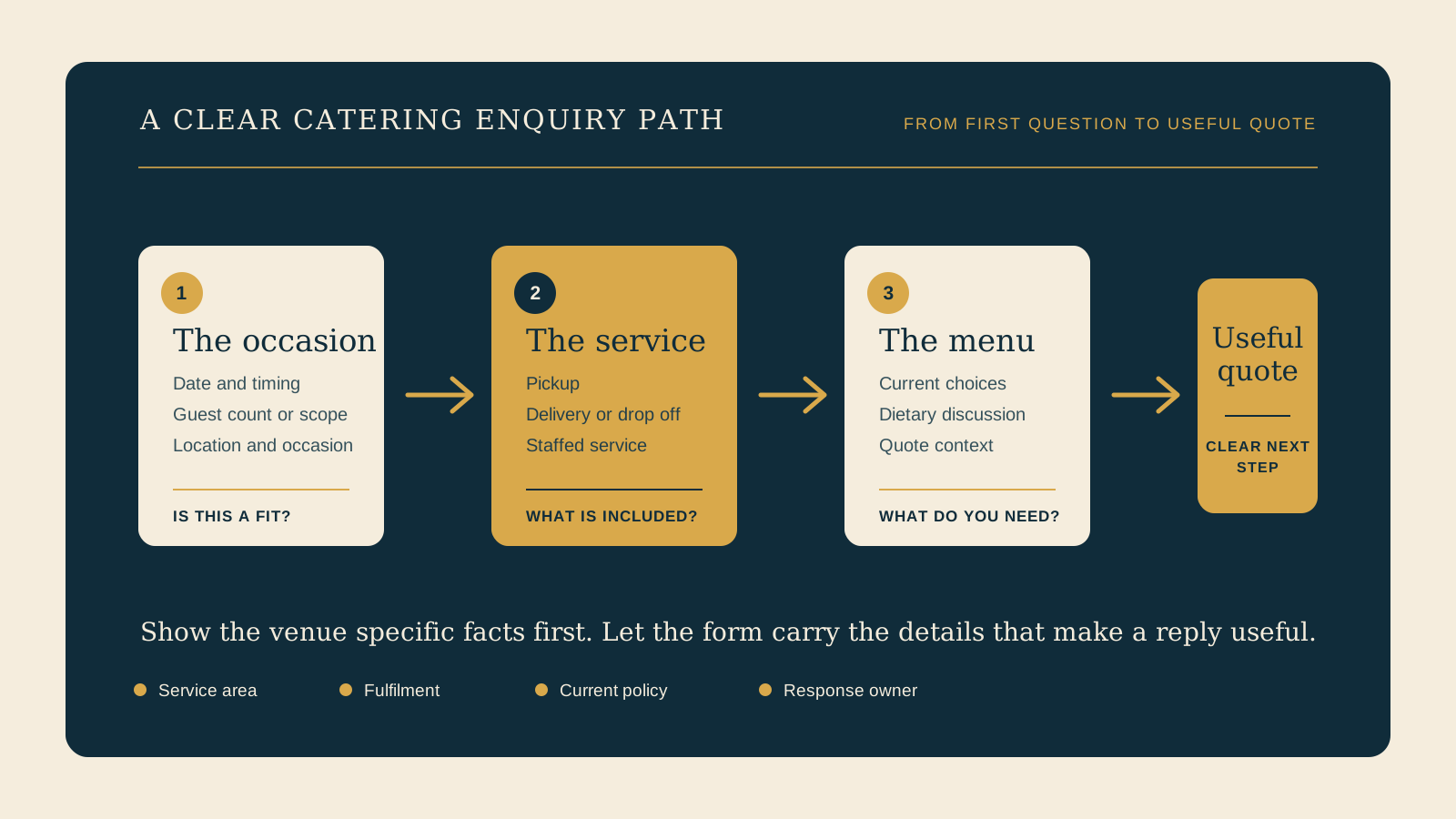
Catering is food prepared for an occasion away from the ordinary table journey. It can mean pickup, delivery, staffed service, or another fulfilment format the venue actually offers. The page should make that scope clear before someone requests a quote.
This is not the same decision as private dining. Private dining helps an organiser decide whether to bring a group into the venue. Catering helps a customer decide whether the venue can bring food, service, or a pickup order to the occasion. If the event takes place at your restaurant, link them to your private dining page instead of making them guess which form applies.
The goal is not to collect every possible detail. It is to answer the questions that determine fit, then make the next step easy for both sides.
Choose a dedicated page only when catering needs its own decision
A dedicated catering page is justified when the offer has a distinct audience, process, menu, fulfilment choice, service area, or quote route. It gives a workplace organiser, host, or event planner somewhere they can review and share before contacting you.
A clear section plus an enquiry route is enough when catering is a simple extension of the regular menu. For example, a venue may only offer pickup platters on request, with no separate packages or service formats. In that case, place the section where guests already find food information and give it a direct link.
Do not create a separate page only because another restaurant has one. Create the amount of space the real offer needs. Whether it is a page or section, a customer should be able to tell what you cater, where you serve, and how to ask about their date without starting from zero.
Show the real catering offer before the form
Start with who the service is for in practical terms. It might suit office lunches, family gatherings, celebrations, production days, meetings, or another occasion the venue genuinely serves. Avoid claiming every event is a fit when the kitchen, team, or delivery setup has clear limits.
Then show the facts that shape a quote:
- Service area: name the areas you currently cover, or say that availability is confirmed case by case. Do not use a map radius unless it reflects the real policy.
- Order scope: describe the event sizes, order types, or group range the venue is prepared to discuss. If scope changes by service, say so.
- Fulfilment: state whether the real options are pickup, delivery, drop off, staffed service, or another defined format. Explain what each format means at this venue.
- What is included: name only the items, setup, packaging, serving pieces, staff, equipment, or collection arrangements that are actually included. State when an item is available only by separate agreement.
- Lead time: publish the venue's current policy, not a guessed number of days. If lead time depends on date, menu, staffing, or delivery area, ask for the event date and explain that availability must be checked.
Photos can make the offer appetising, but they should support the explanation rather than replace it. A customer planning delivery needs to know whether delivery is available. A host considering staffed service needs to know that this is a separate conversation, not something implied by a buffet photograph.
Guide the menu and pricing conversation without inventing certainty
Link to the current food information a customer can use. A readable web menu or menu PDF can help them understand your cooking before they enquire. Where the catering offering differs from ordinary service, show the current catering menu, sample choices, or an honest note that menus are tailored after you confirm the event.
Be clear about what a displayed menu does and does not mean. A customer should not mistake a dine in dish price for a catering quote, or assume that every item travels well or is available for every event. Our guide to restaurant menu prices online explains why current, contextual prices are more useful than vague promises. If your venue publishes catering prices, packages, or fees, keep them current and explain the scope. If it does not, say that the quote follows the event details rather than inserting invented figures.
Dietary information needs the same care. Invite the customer to identify dietary needs and explain how the team will discuss available options. Do not promise that a dish is suitable, allergen free, or safely separated unless the venue can genuinely make and support that statement. The quote and final confirmation should repeat the specific arrangement the venue has agreed.
Ask for the details that make a first quote useful
A generic contact form creates a slow email exchange. A long form can create the opposite problem, especially on a phone. Ask for the few details that determine whether the venue can help and what the first reply needs to cover.
- Name, email address, and preferred contact method.
- Event date, approximate time, and whether the timing is flexible.
- Delivery, pickup, staffed service, or the relevant fulfilment preference.
- Location or service area, when it affects the offer.
- Estimated guest count, order scope, or package need.
- Occasion and any useful setup detail, such as workplace lunch or home gathering.
- Dietary needs or other food requirements, described as information for discussion rather than a guaranteed outcome.
- Menu interests, budget context if the customer chooses to share it, and a notes field for anything else that changes the request.
Mark required fields honestly. The form confirmation should repeat the information submitted, say that the request has been received, and give a clear route for corrections. It is an enquiry, not a confirmed booking or a promised quote.
Set the response expectation and the handoff
Tell the customer what happens next in the language your team can honour. If the venue has a real response window, state it. If it does not, say that the team will check availability and reply, then establish a practical internal response standard before making a public promise.
Name the contact route for a time sensitive change, and make sure someone owns the incoming enquiries. The owner needs access to the current menu, availability, delivery arrangements, and any approved catering terms. They should know when to pass a request to a chef, manager, delivery partner, or event lead.
The first reply should confirm what was understood, identify any missing decision details, and make the next step clear. That may be a menu discussion, availability check, site conversation, or formal quote. A quote request with a good brief helps the customer receive a useful answer, but it should never be treated as confirmation until the venue has explicitly agreed the work.
Make the mobile form simple to complete and resistant to spam
Many catering enquiries begin between errands, meetings, or service tasks. Keep the call to action visible, use labels that fit on a small screen, and choose input types that help a phone enter email, date, time, and number details. Do not make a customer pinch, scroll sideways, or create an account just to ask a question.
Test the form on a real phone from the catering page, menu, and homepage. The wider restaurant website mobile UX checklist can help you check the form alongside the menu, contact details, and other guest paths.
Protect the form without making the legitimate customer do extra work. Use sensible server-side validation, a hidden honeypot field, rate limiting, and reviewable spam handling as appropriate for the website. Keep any additional challenge proportionate, record only the information the venue needs to handle the enquiry, and make sure a genuine request does not disappear silently.
Assign ownership and test the complete quote journey
Catering information changes with the real operation. Assign one person or role to own the page, menu links, form destination, response pattern, and review date. They should know who can approve service areas, menus, staff inclusion, and wording that makes a commitment.
Before launch, submit a realistic test enquiry. Check that the confirmation is clear, the venue receives every required field, the notification reaches the right owner, and the reply process can start from the information provided. Then test a changed date, an incomplete field, and a request from a phone. Fix the confusing step before promoting the page.
Review actual enquiries after launch. If customers repeatedly ask whether you cover an area, provide staff, include serving pieces, handle a menu need, or need more notice, the page has a useful gap to close. Update the venue-specific answer and test it again.
A concise catering page launch checklist
- Decide whether the real offer needs a dedicated catering page or a clear, directly linked section.
- Distinguish offsite catering from private dining and link each customer to the right route.
- Show the current service area, order scope, fulfilment formats, lead-time policy, and what is included.
- Link to current menu information and explain the difference between menu guidance and an agreed quote.
- Invite dietary details without making guarantees the venue cannot support.
- Ask for date, timing, location, event scope, fulfilment preference, contact details, and useful notes.
- Give the form a clear confirmation, a monitored destination, and a response expectation the team can meet.
- Test the full page, form, confirmation, notification, and first reply on a phone.
- Assign an owner and review the page whenever the operating policy changes.
For a quick view of the wider guest journey around this new enquiry path, use the free Restaurant Website Quick Score. It helps you identify three useful website priorities before you add more pages or promotion.
Want a practical review of the live website?
The US$35 Website Check reviews your mobile journey, menu, essential information, contact path, visual clarity, and search basics. If catering matters to the business, we can also flag where the page makes it harder to send or handle a useful quote request.
Get the US$35 Website Check